Rotted door thresholds and when to replace the whole door
The slab might be fine. The frame under your feet is usually what decides it.
October 20, 2026 · 4 min read
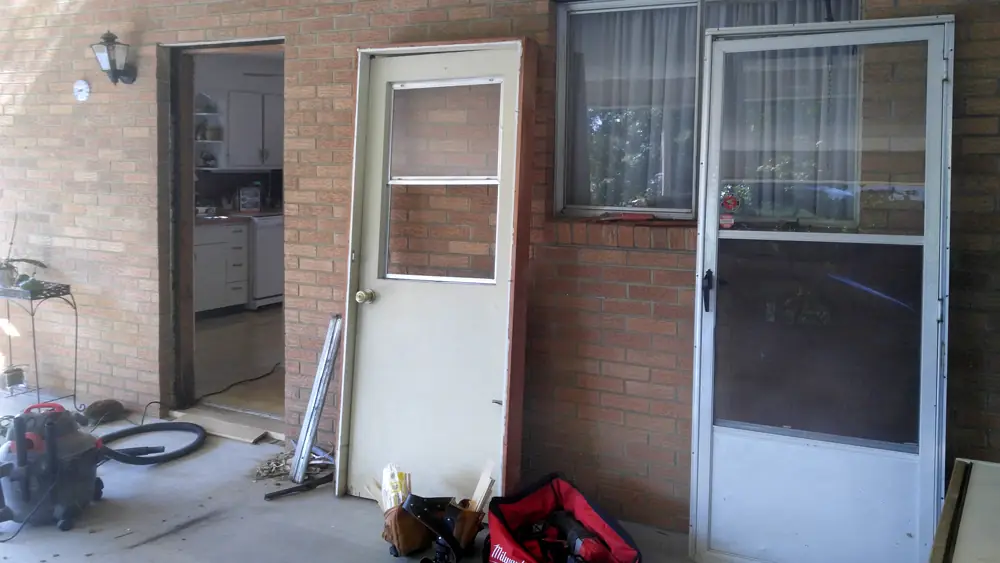
Doors rarely fail all at once. A back door starts to stick in humid weather. You notice a draft along the bottom. The paint at the threshold begins to bubble, and one day your foot feels the board give a little. By then the part of the door that took the abuse isn't the door at all. It's the threshold and the wood around it, and those are what decide whether you repair or replace.
Why thresholds rot first
A threshold sits at the lowest point of an opening, where rain blows in, snow melts, and water runs off wet boots. If the seal under the door is worn, that water sits against the wood. Wood that stays damp breaks down. On an exterior door that doesn't get much shelter, the threshold and the bottom of the frame take the hit year after year.
Storm doors can make it worse in a quiet way. They trap a little moisture between the two doors, and when the weatherstripping gets old, water collects in a spot nobody sees until it's soft. One door job of John Blakemore's started right there, with an old back door and storm door that looked acceptable from the front and a threshold that told a different story from the bottom.
A quick test before you decide
You can learn a lot with a flathead screwdriver and a flashlight. Press the tip into the threshold and into the bottom of the door frame on both sides. Solid wood resists. Rotted wood gives, crumbles, or lets the screwdriver sink in. Check the bottom few inches of the door itself the same way, along with the trim at floor level.
Then look at how the door sits. Open it halfway and see whether it swings freely or drifts. Look at the gap around the edge of the closed door. If the gap is even on all sides, the frame is probably still square. If it's wide at the top on one side and tight at the bottom, the frame may have shifted, which often happens when the wood under it has gone soft.
When a repair makes sense
If the damage is limited to the threshold and a small section of the frame, and the door slab itself is solid, you can often repair in place. The old threshold comes out, any soft wood below it gets cut back to sound material, and new wood goes in. Then the door is rehung, and weatherstripping and a proper seal at the bottom keep water from sitting there again.
On one job, John removed the old storm door and the entry door, then rebuilt the rotted thresholds before setting new doors. Rebuilding the threshold first is what lets the new work last. A great new door on a soft sill is a short-term repair.
A repair is the better choice when the door has character you want to keep, when the frame is mostly sound, and when the opening is an unusual size that would make a new unit awkward. It's also the better choice if the rot is caught early and hasn't spread into the framing.
When pre-hung is the cleaner answer
A pre-hung door comes as a complete unit: the door already mounted in its own frame, with the hinges set and the gaps even. When the old frame is rotted, warped, or out of square, swapping in a pre-hung unit is often the cleaner path. Instead of rebuilding a bad frame around a slab that may not fit it anymore, you install a new frame that's already set up correctly and square it in the opening.
Here are a few signs that point toward replacing:
- Rot that runs up the frame or into the studs beside the opening, not just the threshold.
- A door that has swollen, cracked, or delaminated at the bottom edge.
- Gaps and light around the frame that return after you adjust the hinges.
- A door that's been repaired more than once in the same spot.
John has installed both interior and exterior pre-hung doors, and on exterior jobs he's reused the home's original interior trim so the inside still looks like your house. One exterior replacement he did went in with the original interior trim in place, while the matching storm door was a special order that arrived later. If you're replacing an entry door, ask about the storm door at the same time. Special orders can take longer than the door itself, so it's worth starting early.
Finishing is what keeps it from rotting again
Whichever route you take, the paint is not just about looks. On those door jobs, John painted the doors, frames, and molding after installation. Every cut edge, the bottom of the door, and the threshold area should be sealed and painted, because bare wood at the bottom is where water gets in. Skipping that step is how a brand new door ends up with the same problem in a few years.
If your threshold feels soft or your door has started to drag, don't wait for the day it won't latch. Call or text John at 865-978-0489 for a free estimate. He handles door and window repairs and exterior and interior door replacement, and his labor carries a 1-year guarantee.
I'm Your Handyman Knoxville, 865-978-0489
Call 865-978-0489More articles
Fix small plumbing leaks before they spread
Most flooded bathrooms started as a drip that somebody meant to get to.
Choosing LED color temperature and a dimmer for old fluorescent fixtures
The fixture matters less than two numbers on the box: the K rating and the dimmer it's paired with.