Repairing a vinyl fence after storm or lightning damage
A fence that looks mostly fine after a storm can still have a bad post holding up a good-looking section.
October 20, 2026 · 4 min read
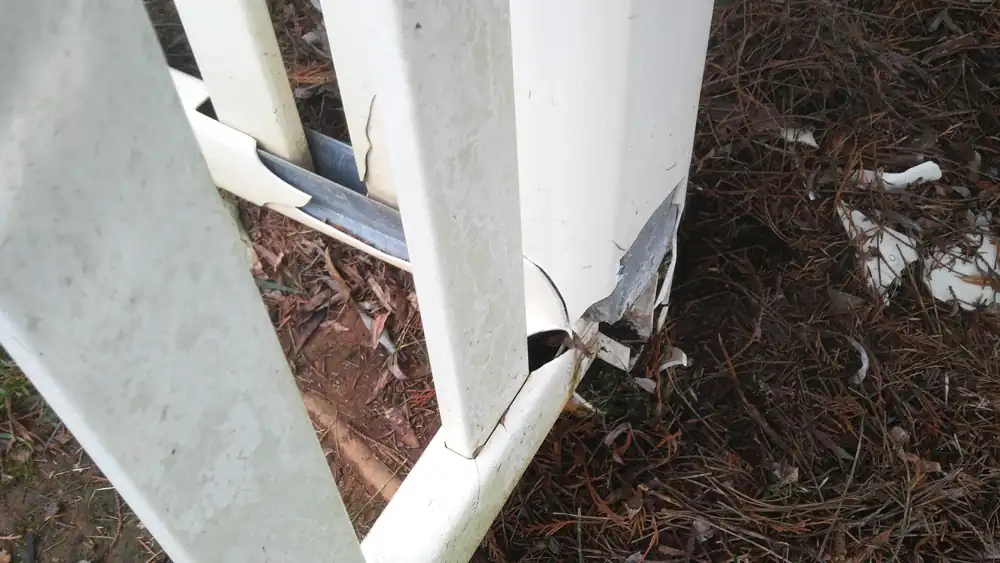
After a big storm, most homeowners walk the yard and look for the obvious: a section on the ground, a gate hanging by one hinge. The harder damage to spot is the kind that leaves the fence standing. Lightning and high wind can crack a post, shake a footing loose, or split a rail, and the fence just leans a little until the next storm finishes the job. John Blakemore has repaired both kinds of damage, and the first thing he does is figure out how far the damage actually goes.
Start with a safe, careful walk-through
Before anyone touches a damaged fence, look for hazards. Stay away from downed power lines, and don't assume a fallen branch is just a branch. Once it's safe, walk the full length of the fence, not just the section that fell. Photograph everything, close up and wide, before any cleanup happens. Good photos help you remember what the fence looked like and help whoever does the repair understand what happened.
Then go post by post. Push gently on each one. A solid post stays put. A cracked or loose one moves or rocks, and you may feel the footing shift underground. Look for splits along the post face, rails that have pulled out of their slots, and caps that have popped off. A post that was hit by lightning can show a clean vertical split, scorching, or a hairline crack that's easy to miss in daylight.
What a lightning strike does to vinyl
On one job, a vinyl fence was struck by lightning. The damage wasn't just a single broken post. The posts, the concrete footings under them, and the nearby sections all had to come out. Vinyl is strong and doesn't rot, but a hit like that can split the material and loosen the foundation it sits in. A post that's cracked inside can look intact from the outside until it's tested.
John removed the damaged posts, the old foundations, and the affected sections, then set new solid posts. The posts were custom-cut on site to match the existing layout, so the new run lined up with the fence that survived. That detail matters, because a fence is only as good as its alignment. A section that's a half inch off in height or a little out of line shows from the street.
Matching is the hard part
Vinyl fencing comes in many profiles, colors, and rail systems, and they're not always interchangeable. A post that looks right might not accept the rails you already have. Before ordering anything, measure the post size, the rail height, and the spacing between posts. Take a clear photo of the post and the way the rails connect to it. If you have spare pieces from the original install, keep them handy, because they're the best reference you'll get.
Ordering parts is where things can go sideways. One homeowner, Rob Schriver, wrote about a job where storm damage knocked out about half of the back yard fence. John removed the broken fencing, including posts that had been set in concrete, then lined up and squared the new posts and slats and anchored them securely. When the hardware store sent the wrong posts, John helped reorder the right ones. That's a normal part of fence repair. The job isn't finished until the parts fit, so it helps to confirm the exact product before it's delivered.
What a solid repair involves
A fence repair is mostly about what happens below ground and how well everything lines up. These are the steps that matter most:
- Removing the damaged posts along with their old footings, not just snapping off what's above the dirt.
- Setting new posts plumb and square to the existing line before they're locked in.
- Anchoring them securely, especially at corners, gates, and anywhere the fence takes wind.
- Fitting the rails, panels, or slats so gaps are even and the tops follow the same line as the rest of the fence.
Taking shortcuts at any of these steps usually shows up in the next windstorm. A post set loosely in a shallow hole can look right on the day it's installed and lean within a season. A footing that wasn't cleared properly can leave the new post sitting against old, cracked concrete.
Repair a section or replace more of it
Sometimes a single damaged section can be swapped and the rest left alone. Other times, replacing half of the fence is smarter, especially when several posts have loosened or the profile of the old fence is hard to match. A short run of mismatched panels often looks worse than a longer run of consistent ones. If the fence is old and weathered, new white vinyl can also look brighter than what's next to it, so it's worth setting expectations before the work starts.
If a storm or a lightning strike has left your fence leaning, split, or missing a section, call or text John at 865-978-0489. He'll look at the whole run, tell you what actually needs to come out, and give you a free estimate. His labor carries a 1-year guarantee, and his contracts are paid in full only when the finished work is to your complete satisfaction.
I'm Your Handyman Knoxville, 865-978-0489
Call 865-978-0489More articles
Fix small plumbing leaks before they spread
Most flooded bathrooms started as a drip that somebody meant to get to.
Choosing LED color temperature and a dimmer for old fluorescent fixtures
The fixture matters less than two numbers on the box: the K rating and the dimmer it's paired with.